5 Things to Know About the Trump Meme Coin Scam Allegations
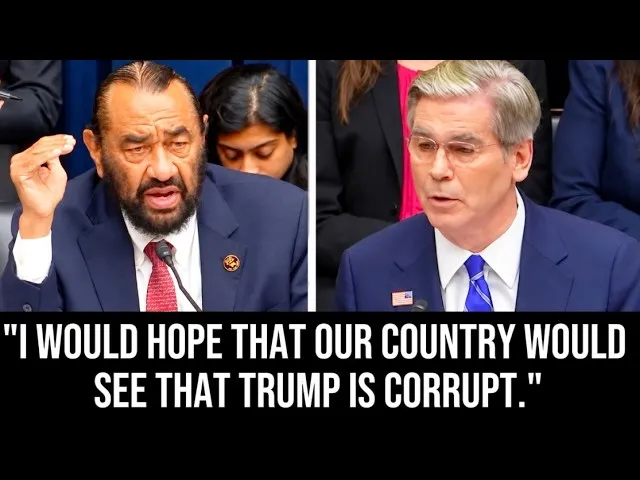
Video: WHOA: Al Green GRILLS Bessent over Trump's meme coin “scam”
Need articles like this for your video? They help promote it on YouTube and Google — order them in the Telegram bot @sat_sit_bot. Articles with your video embedded are written and posted by the bot itself — on popular topical sites (no ads). Your first 50 articles are free.
· based on the channel Daniel Reed
Meme coin is a catch-all term for a cryptocurrency with no underlying product, cash flow or utility, whose price depends entirely on hype and on someone else paying more later. The controversy around Trump's meme coin, raised in a Senate exchange between Senator Al Green and Treasury Secretary Scott Bessent, is a useful case study in why these tokens attract fraud allegations and how retail buyers end up holding the losses.
What Al Green asked Scott Bessent about the Trump meme coin
The core of the exchange is simple: a sitting senator asked the Treasury Secretary to account for a token tied to a political figure, and treated it as a scam rather than an asset class. Bessent's responses were repeatedly characterized as evasive in the clip, with the secretary deflecting rather than defending the token's economics. The substantive point is not partisan — it is that a token whose issuer profits directly from the enthusiasm of its own supporters sits in an unusual regulatory blind spot.
How a meme coin actually works and where the money comes from
A meme coin generates no revenue, pays no dividend and secures no network. Its price is set purely by the order book. That produces four structural features every buyer should understand:
- Zero intrinsic value. There is no balance sheet, no product and no cash flow to anchor a valuation.
- The greater-fool problem. Gains for early holders are funded by later buyers. When new money stops arriving, the price collapses.
- Concentrated supply. Issuers and insiders typically hold large allocations, so a single wallet can move the market.
- Liquidity risk. Thin pools mean exits are cheap on the way in and expensive on the way out.
That combination is why critics apply the Ponzi and pyramid labels. Strictly, a Ponzi scheme requires a central operator paying old investors with new deposits, while a pyramid relies on recruiting. Meme coins are neither exactly — but the wealth transfer from late to early participants is the same shape.
Who loses money when the hype fades
Retail buyers who enter after the publicity peak absorb most of the damage. By the time a political or celebrity token dominates headlines, insiders have usually already distributed. The pattern repeats: a spike on announcement, a plateau on media coverage, then a slow bleed as attention moves to the next launch. Buyers who treat the token as a lottery ticket rather than an investment are the ones left holding it.
Why political tokens raise conflict-of-interest questions
The objection raised in the Senate exchange is not only about investor losses. When an officeholder or their family benefits financially from a token bought by supporters, every policy decision touching crypto regulation becomes a question of self-interest. That is the substance behind the "scam" framing: not that the token is illegal, but that the issuer has both the power to influence its regulatory environment and a direct financial stake in its price.
Red flags to check before buying any meme coin
- Anonymous or pseudonymous team with no verifiable track record.
- Liquidity not locked, or lock terms that expire before the hype cycle ends.
- Top wallets holding a large share of supply, visible on-chain.
- Marketing that promises returns or frames buying as support for a person or cause.
- No roadmap beyond listings and influencer posts.
- Pressure to buy fast, which is the signature of a distribution phase.
None of these prove fraud on their own. Together, they describe a structure where the issuer wins and the buyer carries the risk.
What regulators can and cannot do about meme coins
Most meme coins fall outside securities law because buyers expect profit from others' enthusiasm rather than from a common enterprise managed by a promoter — a distinction that is legally narrow and practically blurry. Enforcement tends to arrive after the damage, targeting outright fraud such as fake liquidity locks or wash trading rather than the token design itself. That gap is exactly what the Senate questioning was probing: whether existing disclosure rules are adequate when a political figure is the promoter.
Bottom line on the Trump meme coin controversy
The Senate exchange between Al Green and Scott Bessent matters less for what was said than for what it exposed: a token class where the issuer profits from supporters, losses land on late buyers, and regulators have limited tools to intervene before the money is gone. Anyone considering a meme coin should assume the price reflects attention, not value, and that the exit will be crowded. The full breakdown of the hearing is available on Daniel Reed's channel, which covers the exchange and the surrounding crypto policy debate.
Frequently asked questions
Key takeaways
- Senator Al Green pressed Treasury Secretary Scott Bessent over Trump's meme coin, calling it a "scam" during a Senate exchange.
- Meme coins are tokens with no cash flow or utility; value rests entirely on the next buyer paying more than the last.
- The 'greater fool' dynamic means late buyers absorb the losses when attention fades and liquidity dries up.
- Critics argue political tokens create conflicts of interest because the issuer profits directly from supporter purchases.
- Red flags include anonymous teams, locked liquidity that can be pulled, and hype-driven pricing with no product behind it.
Questions & answers
Is a meme coin the same as a Ponzi scheme?
Not technically. A Ponzi scheme pays earlier investors with money from new ones under a central operator, while a meme coin simply relies on buyers paying more than the previous holder. The financial outcome for late buyers can look identical, which is why the labels get used loosely.
Why do people keep buying tokens tied to politicians?
Some buy for ideological support, some for the chance of a quick gain, and some because they believe access or influence comes with holding. The common thread is that the purchase is driven by attention rather than any assessment of value.
What should I check first before buying a meme coin?
Look at who holds the supply, whether liquidity is locked and for how long, and whether the team is identifiable. If the pitch is urgency plus loyalty to a person, treat that as a warning rather than a reason to buy.
Can regulators stop political meme coins?
Only in narrow cases. Most tokens fall outside securities definitions, so enforcement usually targets outright fraud after losses occur rather than the token design itself. The Senate questioning highlighted that gap rather than proposing a fix.
Source: WHOA: Al Green GRILLS Bessent over Trump's meme coin “scam” · Markdown version